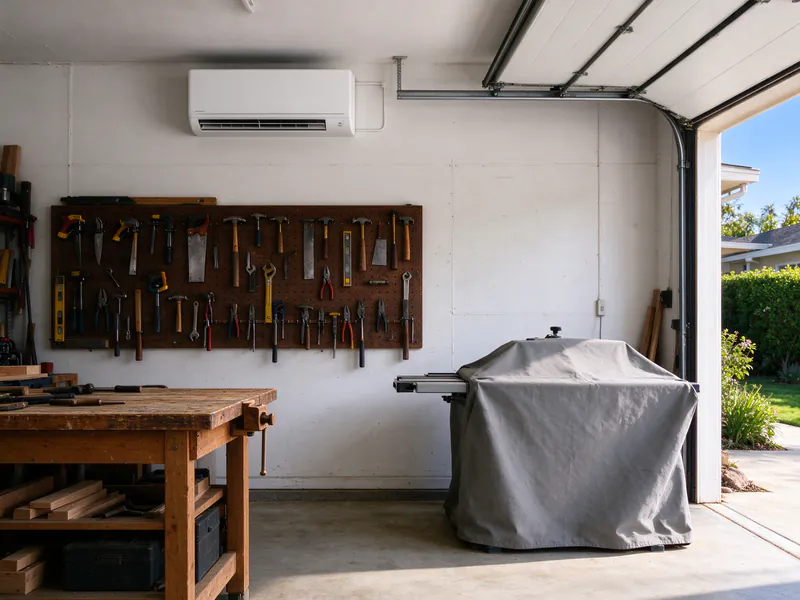
Mesa Mini Split San Diego installs garage mini splits across San Diego and San Diego County for garages that have become workshops, home gyms, offices, studios or hobby spaces. The work is done by licensed and insured contractors holding the California C-20 (HVAC) license. A heat pump mini split cools the garage on a hot afternoon and takes the chill off a winter morning, and it is sized for the garage as it actually is, not for its floor area.
Garages are among the hardest spaces in a house to condition, and the reasons are physical. Most were built to shelter a car, not people: thin walls, often no insulation in the roof, a large door that leaks air at every edge, and a concrete slab. A mini split can make them comfortable, but only when the plan accounts for all of that.
How the garage will be used comes first
A woodshop used two evenings a week, a gym used every morning before work and a home office used eight hours a day are three different problems. Hours of use, the number of people, heat from tools or a freezer, and anything that needs protection, such as finishes that dislike heat, change both the size of the unit and where it goes.
Use also decides what “comfortable” has to mean. A workshop may only need to stay below the high 80s in summer; an office needs to feel like a room in the house. Setting that target early avoids paying for capacity nobody needs, or buying too little for the hours that matter.
Why garages are hard to condition
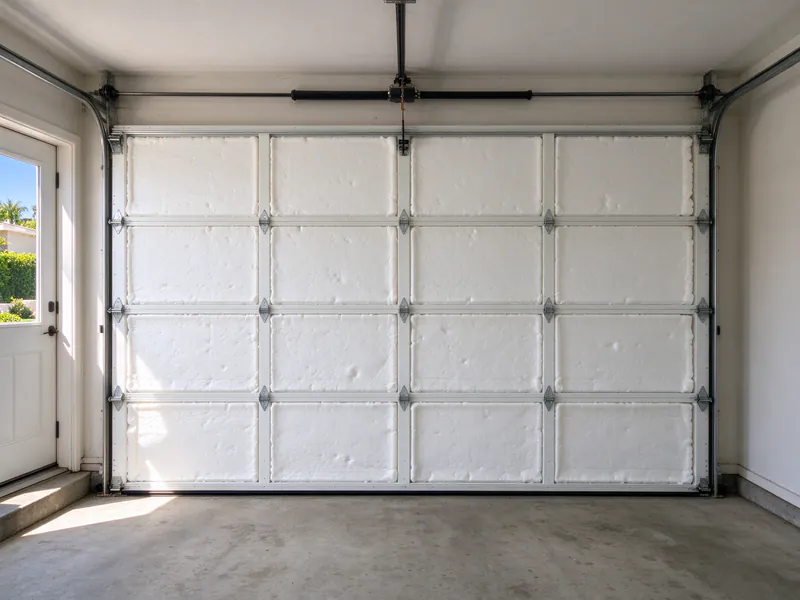
The garage door is the largest single weakness. It is a big panel, often uninsulated metal, with gaps along its edges and bottom, and it faces the street or driveway in full sun. Air leaks around it the whole time a system runs. Uninsulated walls and a roof with no insulation above the ceiling let heat straight through. The slab stores heat during the day and releases it for hours.
Climate amplifies all of this inland. NOAA’s climate normals count 56.8 days a year at 90°F or above in El Cajon and 53.9 in Escondido, against about 3 at Lindbergh Field. A west-facing garage in El Cajon on an August afternoon is a different load from a shaded garage near the coast. Winters run colder inland too: the CEC’s design data puts Escondido’s heating design temperature in the low 30s, so a garage used on winter mornings needs real heating output at those temperatures.
Sizing an insulated vs uninsulated garage
Square footage cannot size a garage. Two garages with the same footprint can carry very different loads, depending on insulation, the door, sun exposure and the roof. A Manual J load calculation counts each of those as they are.
Uninsulated garage
Here the load swings hard with the weather. A unit sized to hold a comfortable temperature at the hottest hour ends up large, expensive to run and oversized most of the year. Often the better money goes first to insulating the ceiling, weatherstripping the door or adding an insulated door, and then to a smaller unit. Where insulating is not practical, the honest plan is a unit that takes the edge off peak heat rather than one that promises room-like conditions.
Insulated garage
With insulated walls, ceiling and a sealed or insulated door, a garage behaves much more like a room, and a modest single-zone unit is usually enough. Oversizing becomes the risk, as in any small room: a unit that cycles on and off leaves the air damp. The sizing guide explains how loads are built.
Part-time use suits a mini split
An inverter mini split ramps up hard when first switched on, then slows to hold the setpoint, and costs almost nothing when off. That fits a space used in bursts. The practical habit is to start it a little before you need the garage, because walls and slab that baked all day take time to cool. Grouping garage work outside SDG&E’s 4 to 9 p.m. on-peak window, where the rate plan allows, also matters, since published rates in those hours are the highest of the day. The operating cost guide shows the math.
Head placement and condensate
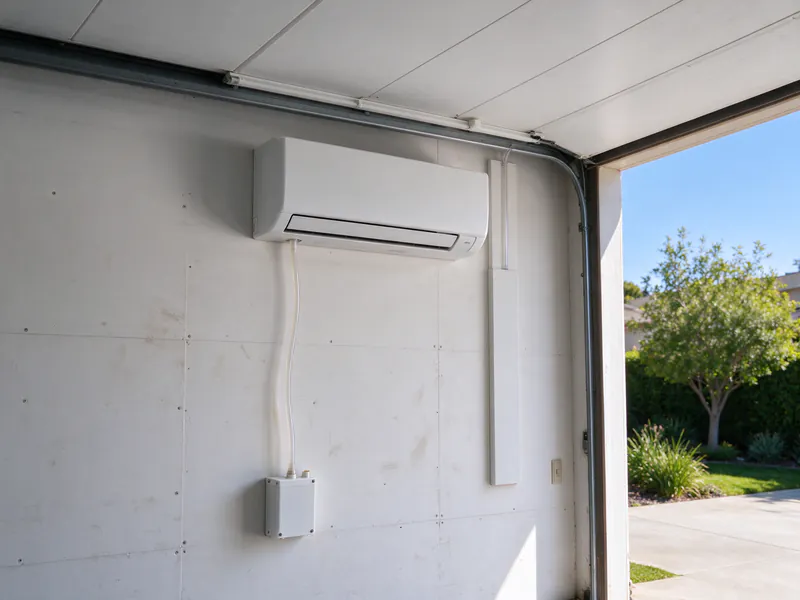
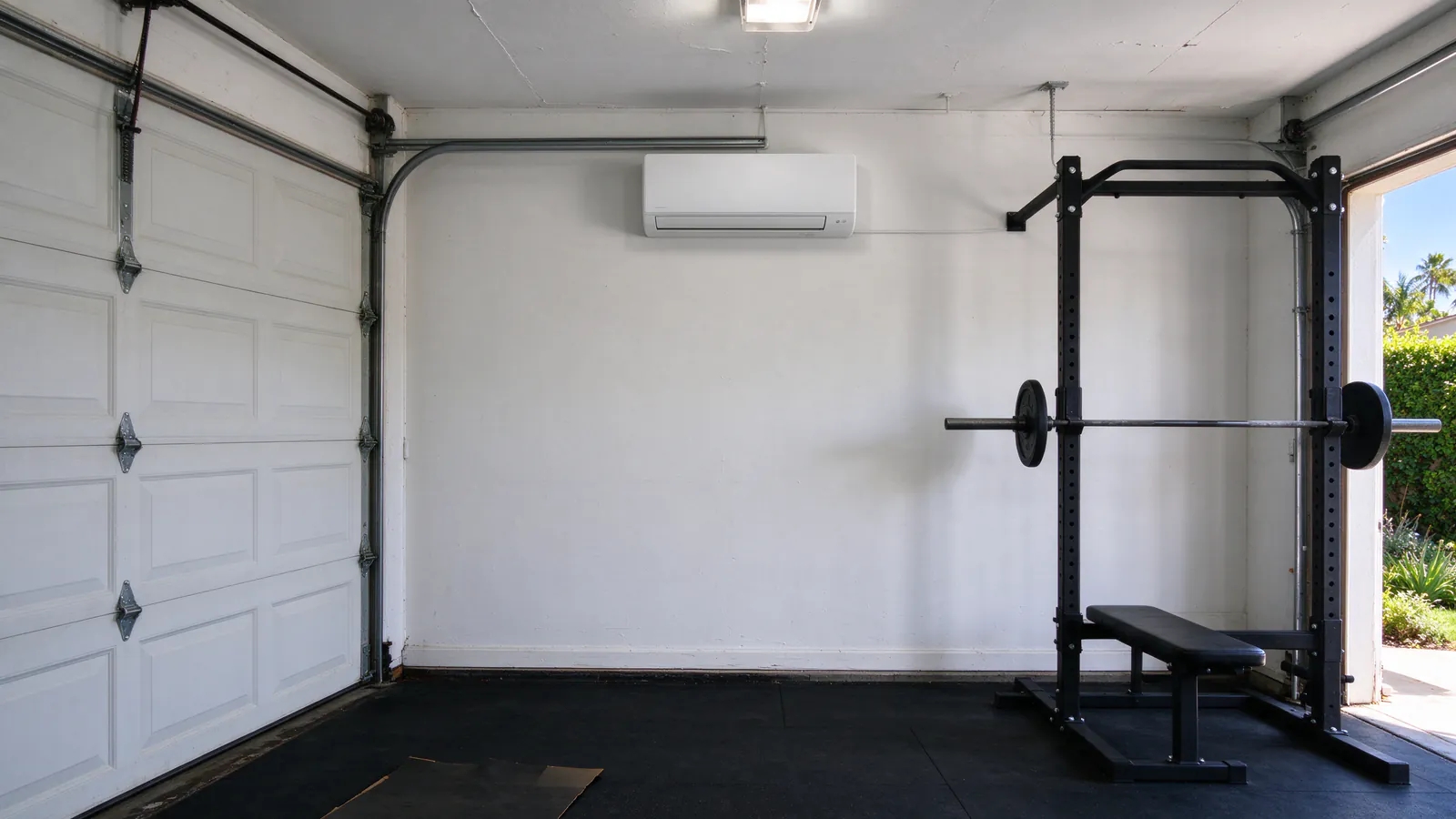
Garage walls are often open framing or unfinished drywall, which makes routing easier than in a finished room. The head goes high, clear of the door track and opener, and away from where car exhaust collects and where the dustiest work happens. Dust is a real issue in workshops: the head pulls air through its filter and coil, and sawdust clogs both fast. Filter cleaning and scheduled maintenance matter more in a shop than in a bedroom.
Condensate needs a planned route. Draining onto the garage floor is not acceptable; the line runs with steady slope through the wall to a spot outside where water will not pool against the foundation or a neighbor’s fence. Where the head sits on an interior wall, a condensate pump lifts the water. The condensate drainage guide covers both.
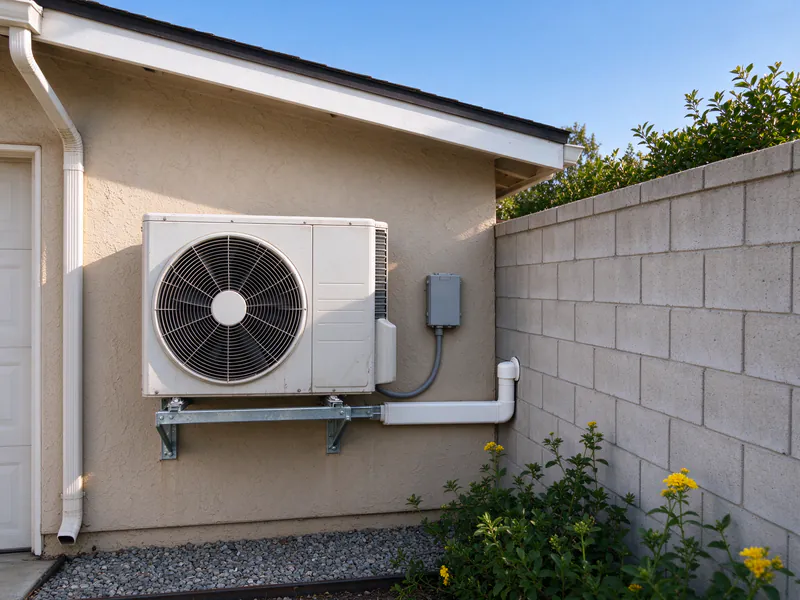
Outdoor units on narrow side yards
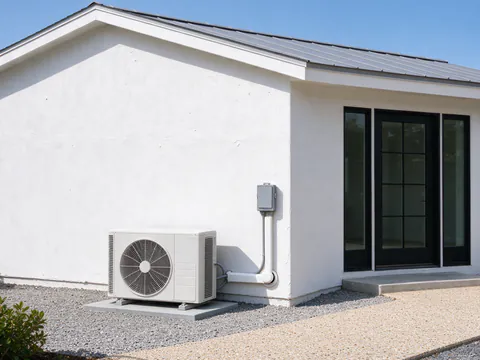
Garages often sit along the narrowest side yard on the lot, sometimes a few feet from the neighbor’s fence. In the City of San Diego’s residential zones, a condenser in a required side or rear yard has to sit at least 4 feet from the property line unless sound attenuation shows it meets the Municipal Code’s noise limits, which for single-family zones are 50 dB in the day and 40 dB at night at the property line. Where the yard is too tight, a wall bracket, a spot in the rear yard or a quieter model are the usual answers. From January 1, 2027, a state law, SB 222, caps the extra setbacks a city can require for heat pump installations at 3 feet in side and back yards; the City has not yet published how it will apply that. The outdoor unit never goes inside the garage, since it would blow the heat it removes back into the space. The placement guide and noise guide cover the details.
Electrical: main panel or garage subpanel
The outdoor unit needs a dedicated 240V circuit and a disconnect within reach. An attached garage often sits close to the main panel, which keeps the run short. A detached garage may already have a subpanel; whether it has the capacity and spare spaces is checked on the visit. The electrical requirements guide explains what to look for.
A mini split does not make a garage living space
Conditioning a garage makes it comfortable. It does not change what the garage legally is. Turning a garage into a bedroom, an apartment or any habitable space is a change of use with its own building permit, Energy Code compliance and inspections, and if the result is a separate dwelling, it is an ADU project. The ADU installation page covers that path. A mini split for a workshop, gym or hobby garage is a mechanical and electrical installation, and in the City of San Diego it falls under the no-plan combination permit for a house or duplex, with the mini-split fee starting at $176.57 for the first unit according to Development Services.
What a garage installation costs
A garage unit is a single-zone installation, so the single-zone range, about $3,000 to $7,500 installed in the San Diego area, is the reference point. What moves a garage job: the capacity the load calls for, the distance to the panel or the need for a subpanel, the condensate route, the outdoor-unit mounting, line-set length around the garage, and any insulation or door work done first. The cost estimator gives a range for your situation.