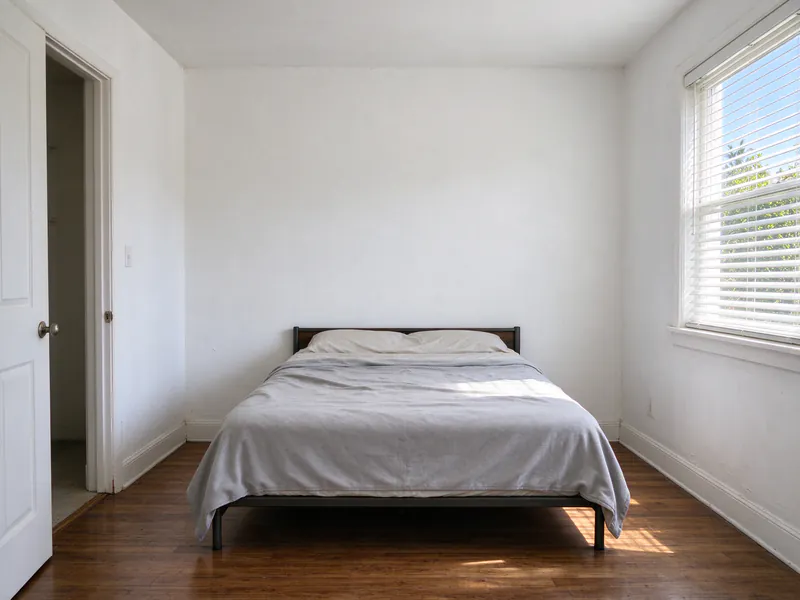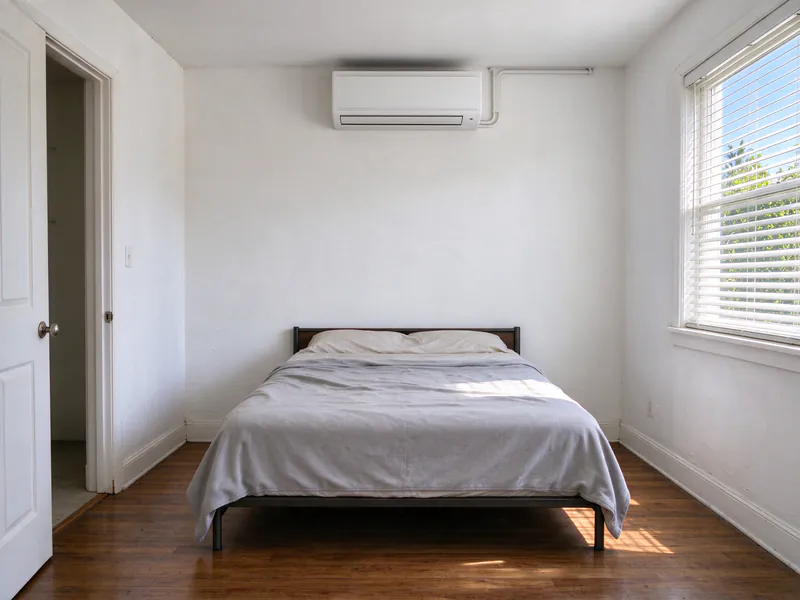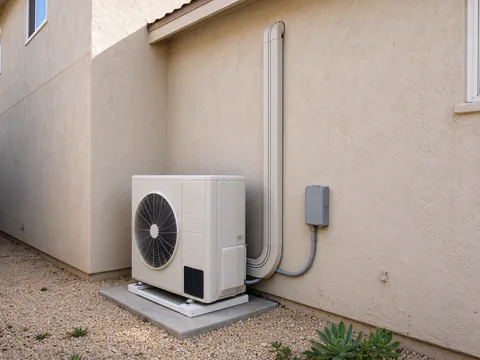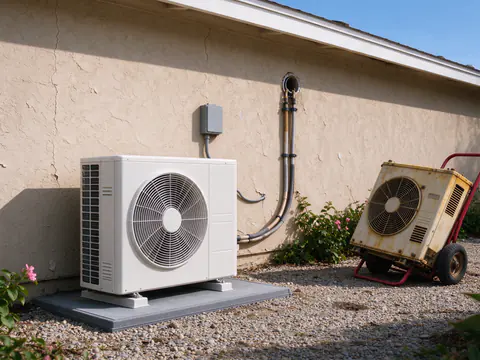
Mesa Mini Split San Diego installs single-zone mini splits across San Diego and San Diego County: one indoor head, one outdoor unit, one refrigerant circuit, one room. The work is carried out by licensed and insured contractors holding the California C-20 (HVAC) license, and a heat pump model both cools and heats the room it serves.
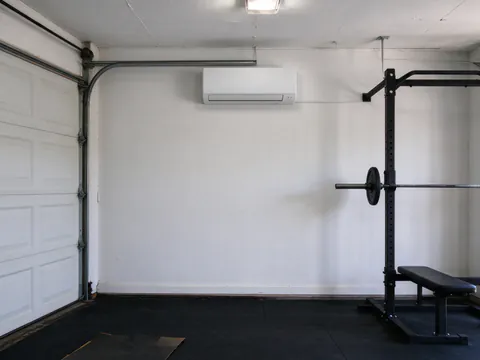
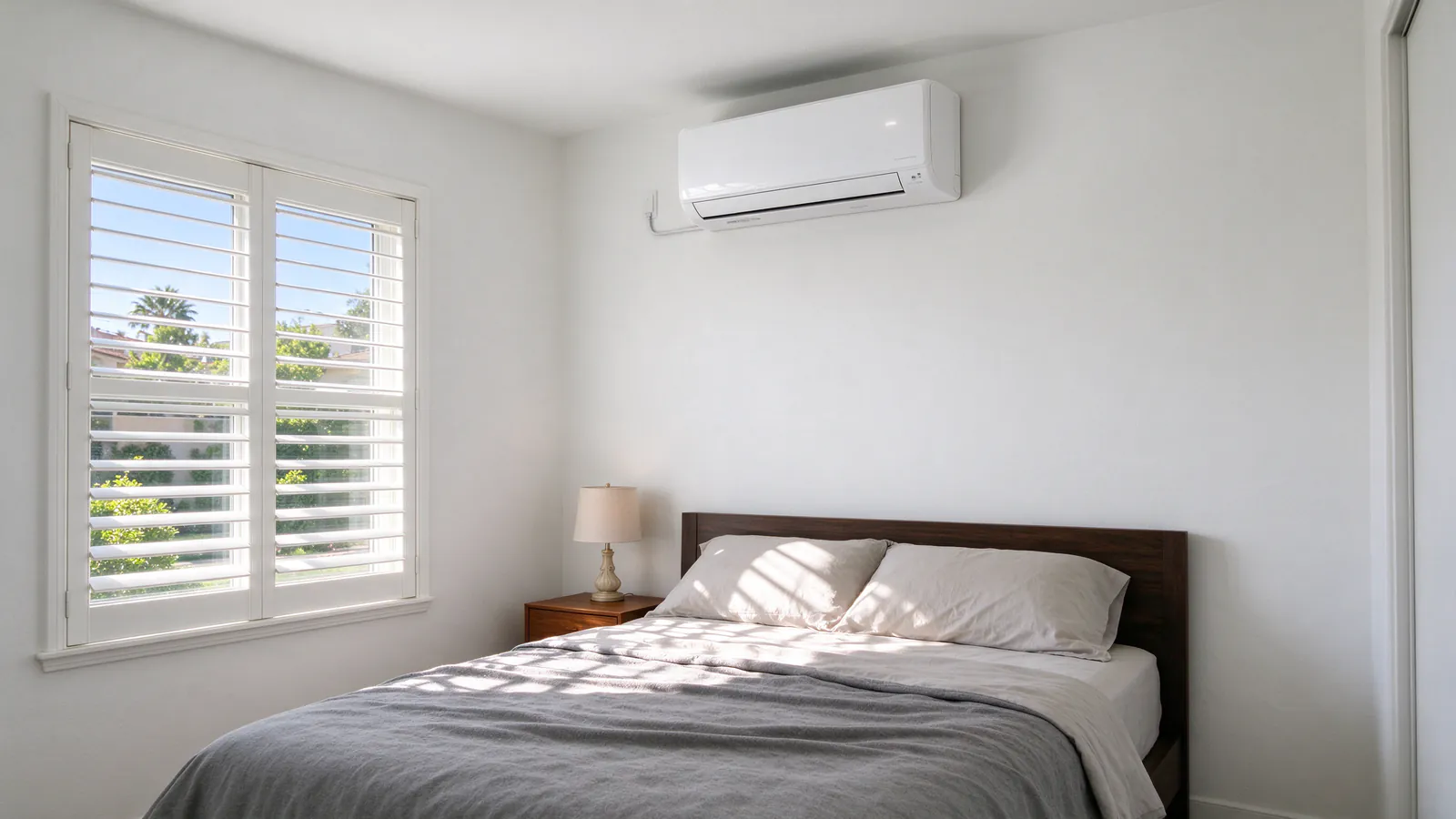
Single-zone is the right shape for a specific problem. The upstairs bedroom that holds the day’s heat until midnight. A home office with west windows and a computer running all afternoon. A garage converted to a gym or studio. The room where a window unit either cannot fit, rattles through the night or simply cannot keep up. In each case one space has its own load, and conditioning it well matters more than touching the rest of the house. If several rooms need help, the logic changes, and multi-zone mini split installation is the better starting point.
What happens on the first visit
The visit is about the room, the wall and the route between them. The contractor measures the room, notes window sizes and which way they face, checks what is above it (an attic, a hot roof, another bedroom) and runs a Manual J load calculation. That number, not the floor area, decides capacity.
Then the practical questions. Which wall can the head go on so air reaches the bed or desk without blowing straight at it? What is behind that wall outside: a side yard, a driveway, a neighbor’s fence four feet away? Where can the condensate drain? How far is the electrical panel, and does it have two open spaces and enough capacity? Where can the outdoor unit sit with airflow, service access and the City’s setback rules in mind? Everything goes into a written, itemized scope before anything is ordered.
Sizing one room: why bigger is worse
A single-zone system lives or dies on matching one room’s load. San Diego makes that harder than it sounds because the same room can carry very different loads depending on where the house is. The California Energy Commission’s design data puts the 1% cooling design temperature at 82°F for San Diego’s Lindbergh Field and 90°F for El Cajon, and NOAA’s climate normals count about 3 days a year at 90°F or above at Lindbergh against 56.8 in El Cajon.
On the coast, the common mistake is oversizing. A small bedroom in Pacific Beach or Point Loma rarely needs much capacity, and an oversized unit reaches the setpoint fast, then cycles off before it has pulled moisture out of the air. Late-summer coastal air carries real moisture: NOAA’s normals put the August mean dew point at Lindbergh at 62.5°F. The room ends up cool and clammy. The fix is a unit whose minimum modulation, the lowest output the inverter can hold, sits below the room’s typical load, so it runs long and slow. Dry mode helps further on muggy days. The coastal San Diego service area page covers the coastal side in more depth.
Inland, the risk flips. A west-facing upstairs room in El Cajon or Escondido can carry a real cooling load on a 100°F afternoon, and an undersized unit runs flat out and still loses ground. The mini split sizing guide walks through how room loads are built.
The route: head, line set, drain
Head placement
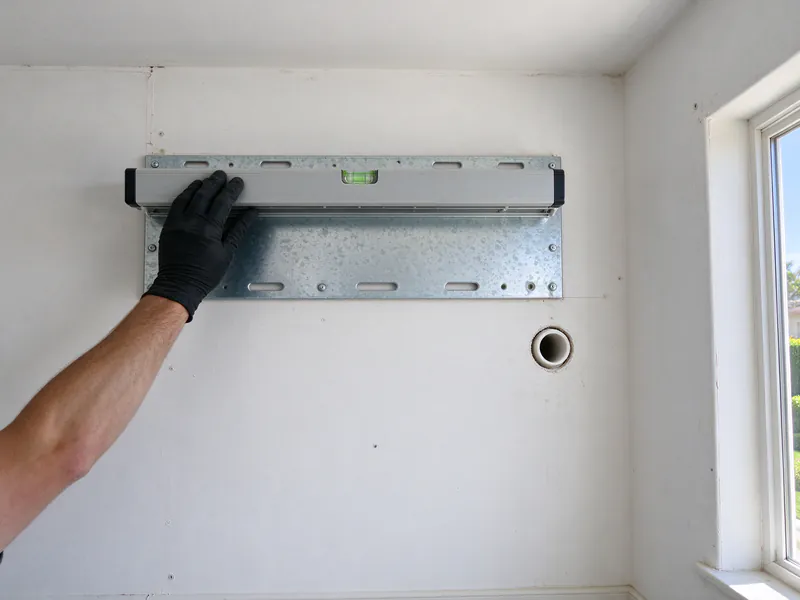
A wall head usually goes high on an exterior wall, so the line set leaves the room in a straight shot. It needs clearance above for return air, a clear throw across the room and a spot where a filter can be pulled without a ladder dance. Where the best wall for airflow is an interior one, the route gets longer and the drain gets harder, which is why placement and drainage are decided together. The placement guide covers both the head and the outdoor unit.
Through the stucco
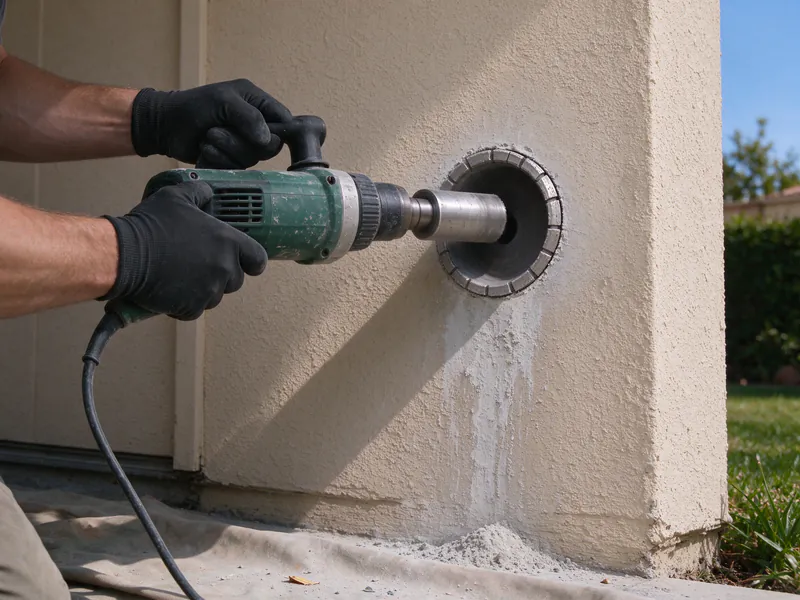
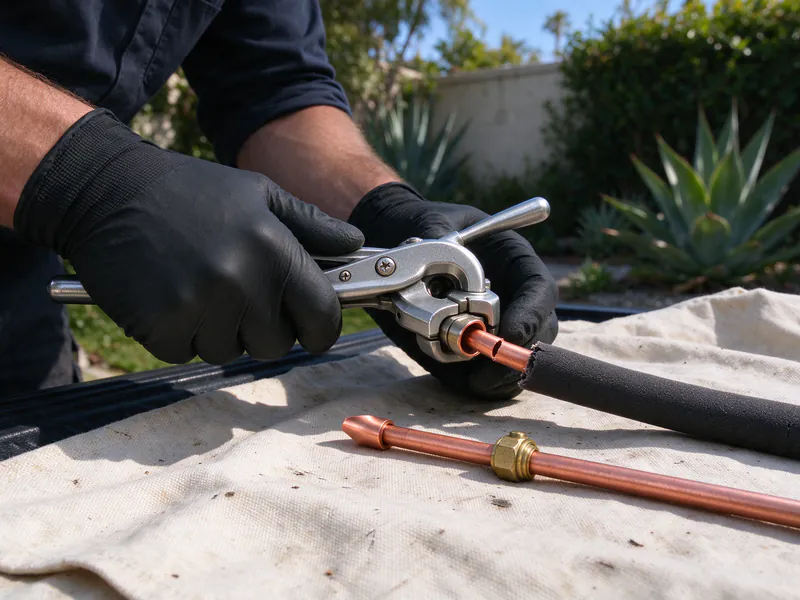
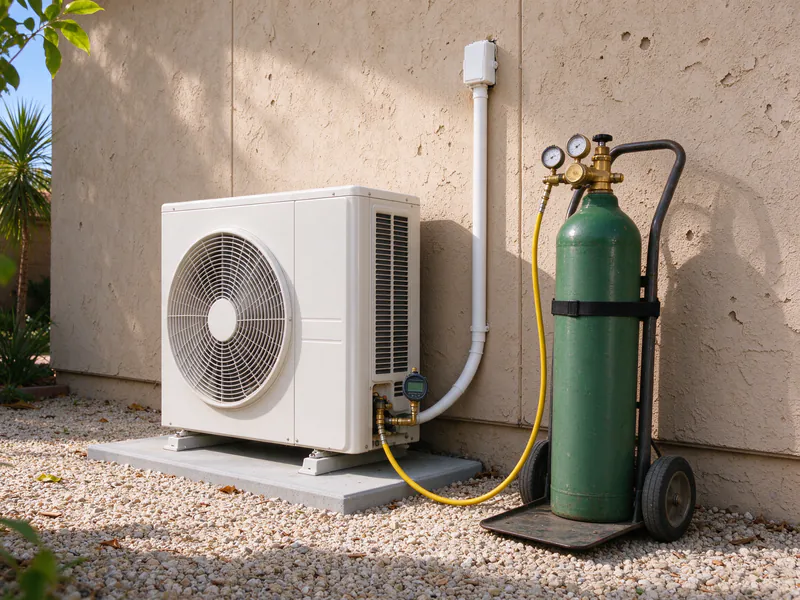
On a stucco house over wood framing or block, the contractor scans for studs, wiring and pipes, then core-drills a single penetration, sleeves it and seals it so water cannot track inside. Outside, the line set, control cable and drain run down the wall to the outdoor unit. A line-hide cover protects the insulation from sun and keeps the run tidy; a well-installed one carries exactly the two refrigerant lines plus the cable and drain, with no loose loops. Line length and the height difference between head and outdoor unit must stay inside the manufacturer’s installation manual, which also governs flare preparation and torque.
Condensate: gravity first
Every head makes water whenever it cools, and on the coast it makes a steady stream on humid days. The preferred route is gravity: a drain line with continuous downward slope from the head to a spot outside where water will not stain stucco, pool against the foundation or drip on a walkway. When the head sits on an interior wall, below grade or anywhere gravity cannot reach, a condensate pump lifts the water instead. Pumps work, but they add a part that can fail and a small sound in the room, so the scope says which method is used and where the water ends up. The condensate drainage guide explains the details.
The circuit and the panel
The outdoor unit needs a dedicated 240V circuit sized from the equipment nameplate, plus a disconnect within reach of the unit so it can be serviced safely. The indoor head is normally powered through the control cable. A single-zone system is one of the lighter electrical loads a mini split can add, but older houses can complicate it. Where a house still has a 100-amp service, sometimes with no open breaker spaces, the panel needs a load calculation first, and sometimes an upgrade. Where a 100-to-200-amp upgrade is needed, a typical San Diego-area range is about $2,800 to $5,500, before any trenching, underground service or panel relocation. The electrical requirements guide has the rest.
Permits and Title 24 in San Diego
Inside the City of San Diego, a mini split at a single-family house or duplex is a no-plan combination permit covering the mechanical and electrical work. Development Services’ fee schedule (Information Bulletin 103) lists $176.57 for the first mini-split air handler, $52.39 for each additional one, and $176.57 for up to five new circuits, so a single-zone permit starts from $176.57 and the exact total is set when the permit is issued. Other cities and the County set their own fees.
Since January 1, 2026, permits follow the 2025 Energy Code (Title 24 Part 6). The California Energy Commission says new HVAC systems need a load calculation, and refrigerant charge verification is required for heat pumps in every climate zone but for cooling-only air conditioners only in zones 2 and 8 through 15. The coast and most of the central city sit in climate zone 7, inland areas such as El Cajon and Rancho Bernardo in zone 10, so a cooling-only unit is verified differently depending on the address. A heat pump model is verified everywhere. A designated or potentially historic property, or a house in a historic district, needs plans and historical review instead of the no-plan path. The permit guide covers each case.
What a single-zone system costs
A typical San Diego-area range for a single-zone mini split, installed, is about $3,000 to $7,500. That is a budgeting range, not a quote. What moves a job within it: capacity and efficiency tier, the head style (a ceiling cassette or concealed duct unit costs more than a wall head), line-set length, how much line-hide is needed, whether a condensate pump is required, the distance to the panel and any panel work, and how hard the outdoor spot is to reach.
Local labor is part of the picture. The Bureau of Labor Statistics puts the mean wage for HVAC mechanics and installers in the San Diego-Chula Vista-Carlsbad metro at $36.52 an hour, about 17% above the national mean of $31.14. A wage is not a billing rate: the billed rate also carries insurance, licensing, vehicles and overhead. The installation cost guide breaks the price down, and the cost estimator gives a range for your situation without a phone call.
Rebates and rate plans
Most heat pump incentives that applied to mini splits have closed. The federal 25C credit does not apply to property placed in service after December 31, 2025. The HEEHRA single-family waitlist closed on July 17, 2026, TECH Clean California heat pump incentives and the City’s HEART program have closed, and California Energy-Smart Homes is fully subscribed for the current year. No SDG&E or San Diego Community Power heat pump rebate was found. What remains open is narrower. The California Energy Commission’s Equitable Building Decarbonization program offers no-cost upgrades to income-qualified households, generally at or below 80% of area median income, with the work done by installers the program itself assigns. The San Diego Regional Energy Network (SDREN) runs a Home Energy Savings program for eligible older homes. Eligibility for either is decided by the program, so check directly with its administrator. A heat pump also makes a household eligible for SDG&E’s TOU-ELEC rate. Replacing gas heat will not reliably lower heating bills at SDG&E’s published rates; replacing electric wall or baseboard heat usually does. The rebates guide tracks status.
When single-zone is the wrong answer
Single-zone stops being the right tool when several rooms need conditioning. Three single-zone systems mean three outdoor units on the property, which is sometimes the best choice and sometimes a cluttered side yard; a multi-zone system shares one outdoor unit but needs careful matching. The single-zone vs multi-zone guide lays out the tradeoffs. If a house already has good ductwork in reasonable condition, a ducted system may serve it better, and that work is outside this service; the mini split vs central air guide explains when each makes sense. And if an old single-zone unit is failing, mini split replacement starts from what can be reused.