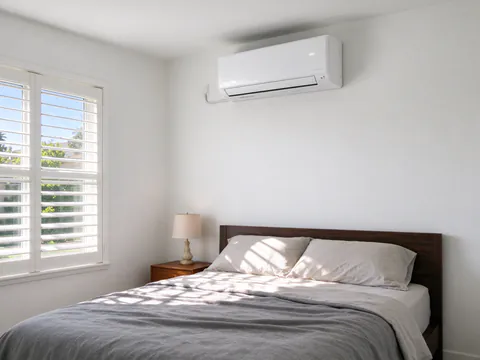
The electrical requirements for a mini split come down to a dedicated circuit sized from its own nameplate, a disconnect within sight of the outdoor unit, two open spaces in the panel for a 240V breaker on most models, and enough spare panel capacity for the new load. The nameplate’s minimum circuit ampacity and maximum overcurrent protection set the wire and breaker; nothing else should.
Mesa Mini Split San Diego installs mini splits across San Diego County, and the electrical work is planned with the rest of the system rather than left for later. The work is done by licensed and insured contractors holding the California C-20 (HVAC) license, and in the City of San Diego the circuit sits on the same no-plan permit as the mechanical work. This guide explains what the electrical scope involves so a quote’s electrical line makes sense.
Why a mini split needs a dedicated circuit
A mini split’s outdoor unit holds the compressor, the outdoor fan and the inverter drive that controls both. It is a continuous, motor-driven load that can run for hours at a time, and its electronics are sensitive to voltage drop. Sharing its circuit with outlets or another appliance would let a vacuum or a space heater trip the breaker under the compressor, or starve it of voltage at the moment it ramps up. A dedicated circuit, one breaker feeding only the mini split, removes those interactions.
Most residential mini splits run at 240 volts, which uses a two-pole breaker and two adjacent spaces in the panel. Some small single-zone models run at 115 volts and use a single-pole breaker. The model chosen during sizing decides which, and that is one reason the electrical scope cannot be finalized before the equipment is.
Reading the nameplate: MCA and MOCP
Every outdoor unit carries a data plate with two numbers that govern its circuit.
MCA, minimum circuit ampacity, is the smallest current-carrying capacity the circuit’s conductors must have. The manufacturer calculates it from the compressor and fan currents, with a margin for continuous running. The electrician picks a wire gauge whose rated ampacity meets or exceeds the MCA, then checks voltage drop over the run from the panel.
MOCP, maximum overcurrent protection, sometimes printed as maximum breaker or maximum fuse size, is the largest breaker or fuse allowed to protect the circuit. The breaker can be smaller as long as it holds through the unit’s normal operation, but it may never be larger.
Because MCA and MOCP differ between models and capacities, a guide or forum post that names “the” breaker size for a mini split is guessing. The plate on the specific outdoor unit, read together with the installation manual, is the only correct source. A replacement unit can carry different figures from the one it replaces, so an existing circuit is checked again on replacement jobs rather than assumed to fit.
The indoor heads and accessories
On most ductless systems the indoor head is powered from the outdoor unit through the communication cable that runs with the line set. The cable is a specified conductor size and type, because it carries both power and the signals the two units use to talk to each other. Some ceiling cassettes, concealed duct units and condensate pumps need a separate power source; the indoor unit types guide and the condensate drainage guide explain where that comes up.
The disconnect at the outdoor unit
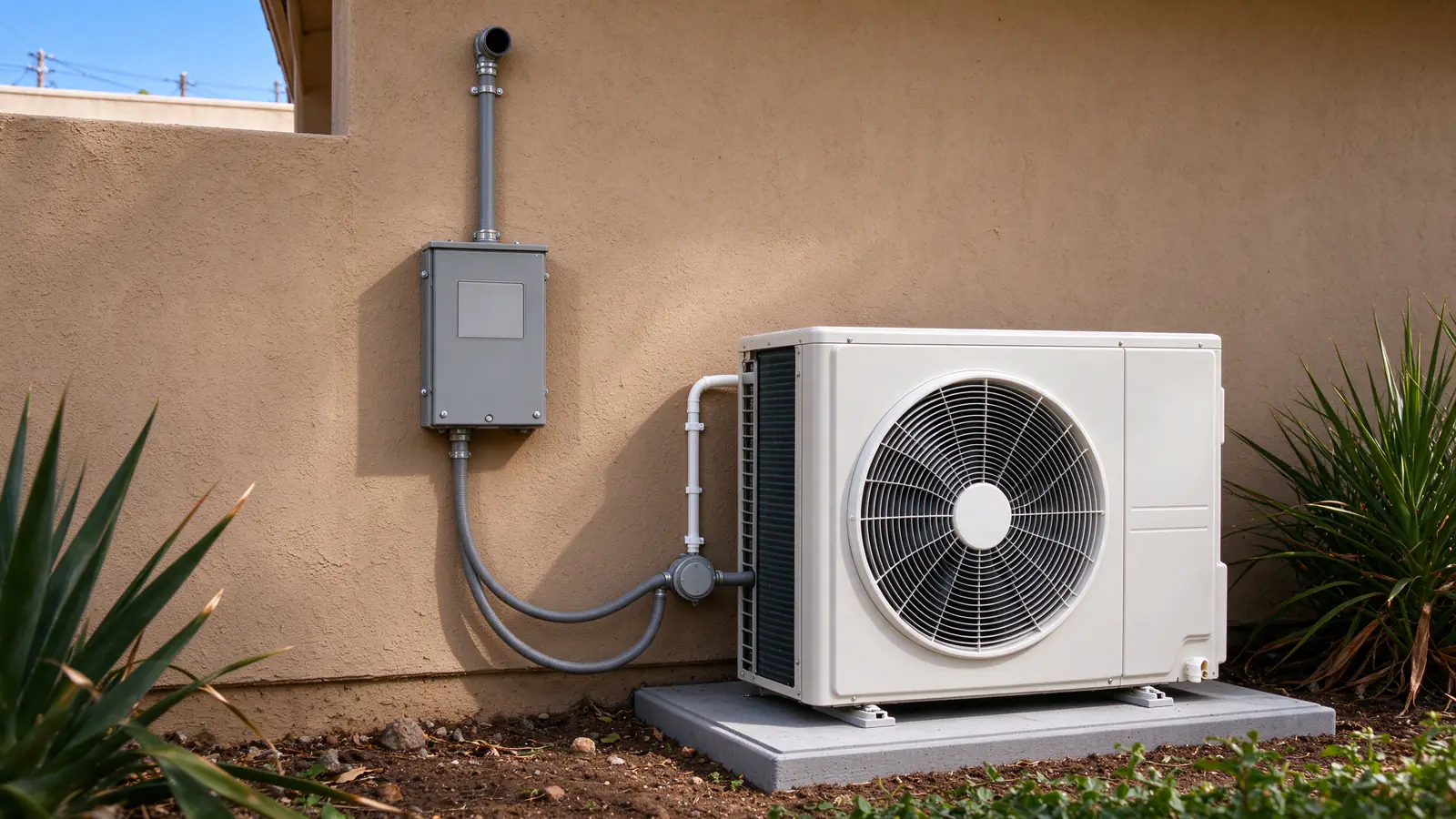
The outdoor unit gets a disconnecting means within sight of it, normally a small weatherproof switch box on the wall beside the unit, with a short flexible conduit whip into the unit’s electrical cover. The electrical code requires it, and the reason is practical: a technician working on the unit can cut power where they are standing and see that it stays off, instead of relying on a breaker in a panel on the other side of the house.
Placement matters on small lots. The disconnect has to stay accessible, so it cannot end up behind a fence board or a planter, and it adds to what sits in a narrow side yard. The placement guide covers the clearances that apply to the unit itself.
Panel space and capacity
Two questions decide whether the panel can take a mini split. The first is physical: are there two open spaces for a two-pole breaker, or can the panel accept a breaker arrangement that frees them? The second is capacity: does the service have enough headroom for the new load alongside everything already connected? The second question is answered with a load calculation, not by adding up breaker sizes.
100-amp panels and service upgrades
Many older San Diego houses still have a 100-amp service. A single-zone unit is one of the lighter loads a house can add, and a 100-amp service can often carry it. Several heads, an electric range, an EV charger or a heat pump water heater on the same service change the picture. Where the load calculation shows the service cannot carry the new load, the choices are a service and panel upgrade, a load-management device that limits simultaneous use, or a smaller system design.
Where a 100-to-200-amp service and panel upgrade is needed, a typical San Diego-area range is about $2,800 to $5,500. That covers the panel and service upgrade with its permit and the coordination of SDG&E’s disconnect and reconnect; panel relocation, underground service or trenching cost more. SDG&E’s home electrification page lists service upgrade requests through its project portal and names meter socket adapters and load management as alternatives to an upgrade in some cases. Electricians in the San Diego-Chula Vista-Carlsbad metro earn a mean $39.54 an hour against $34.37 nationally (U.S. Bureau of Labor Statistics), which is one reason local electrical work prices above national averages. A wage is not a billing rate: the billed rate also carries insurance, licensing, vehicles and overhead.
Several single-zones vs one multi-zone
Electrical scope differs by design. A multi-zone system puts several rooms on one outdoor unit and one circuit. Several single-zone systems each need their own circuit and disconnect, which uses more panel spaces and more wall space outside. The single-zone vs multi-zone guide covers the trade-offs beyond the panel.
Electrical permits and inspection in San Diego
In the City of San Diego, a mini split at a single-family house or duplex is a no-plan combination permit that covers the mechanical and electrical work together. Development Services’ fee schedule (Information Bulletin 103) lists:
| Item | Published fee |
|---|---|
| New circuits 15-45 amps, first five | $176.57 |
| New circuits 15-45 amps, sixth through tenth | $52.39 |
| Circuits 50-200 amps, each three circuits | $353.13 |
| Panel replace or upgrade up to 200 amps | $176.57 |
The mini split’s own mechanical item starts at $176.57, and the exact permit total is set when the permit is issued. For circuits added to a single dwelling or duplex, the City asks for its Electrical Circuit Card at inspection. In unincorporated areas, County Planning & Development Services lists $392 for a mechanical-only permit and $498 for mechanical plus electrical. Other cities run their own permit offices. The permits guide covers the full process, and the permit and inspection are part of the work.
State law adds a later change. SB 222 requires cities and counties to offer online, automated permits for like-for-like heat pump swapouts by July 1, 2028, but that path excludes jobs with new panel work, so a project that needs a service upgrade stays on the standard permit route.
What a clear electrical line in a quote says
A useful quote names the circuit (voltage and breaker size from the nameplate), the wire run and route from the panel, the disconnect, any panel or breaker rearrangement, whether a load calculation was done and what it found, and whether a service upgrade is included or excluded. “Electrical hookup” on its own leaves the expensive question unanswered. Start with the cost estimator or the installation cost guide for budgets, then call or request an estimate so the panel is looked at during the site visit.