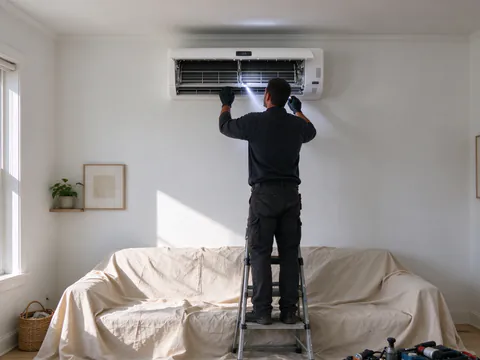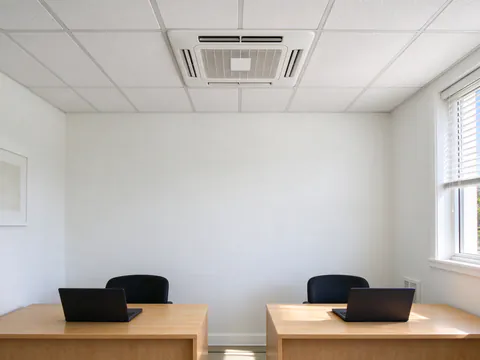
Mesa Mini Split San Diego offers 24/7 emergency mini split repair across San Diego and San Diego County, for wall heads, cassettes, concealed duct units and multi-zone systems from any installer. The work is carried out by licensed and insured contractors holding the California C-20 (HVAC) license.
Emergency service is for failures that cannot safely wait for a weekday appointment. That covers more than a hot room: water reaching a ceiling, a burning smell from a head and a server room losing cooling are emergencies at any temperature. No arrival time is promised, because it depends on the hour, the location and how many systems have failed across the county at once. For problems that can wait, mini split repair covers the full range of symptoms and costs.
What counts as an emergency
Electrical warning signs: safety first
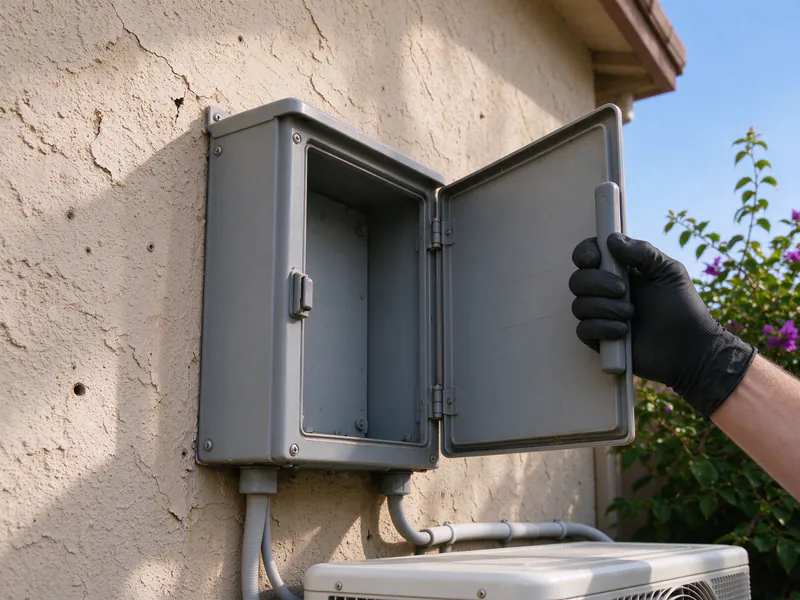
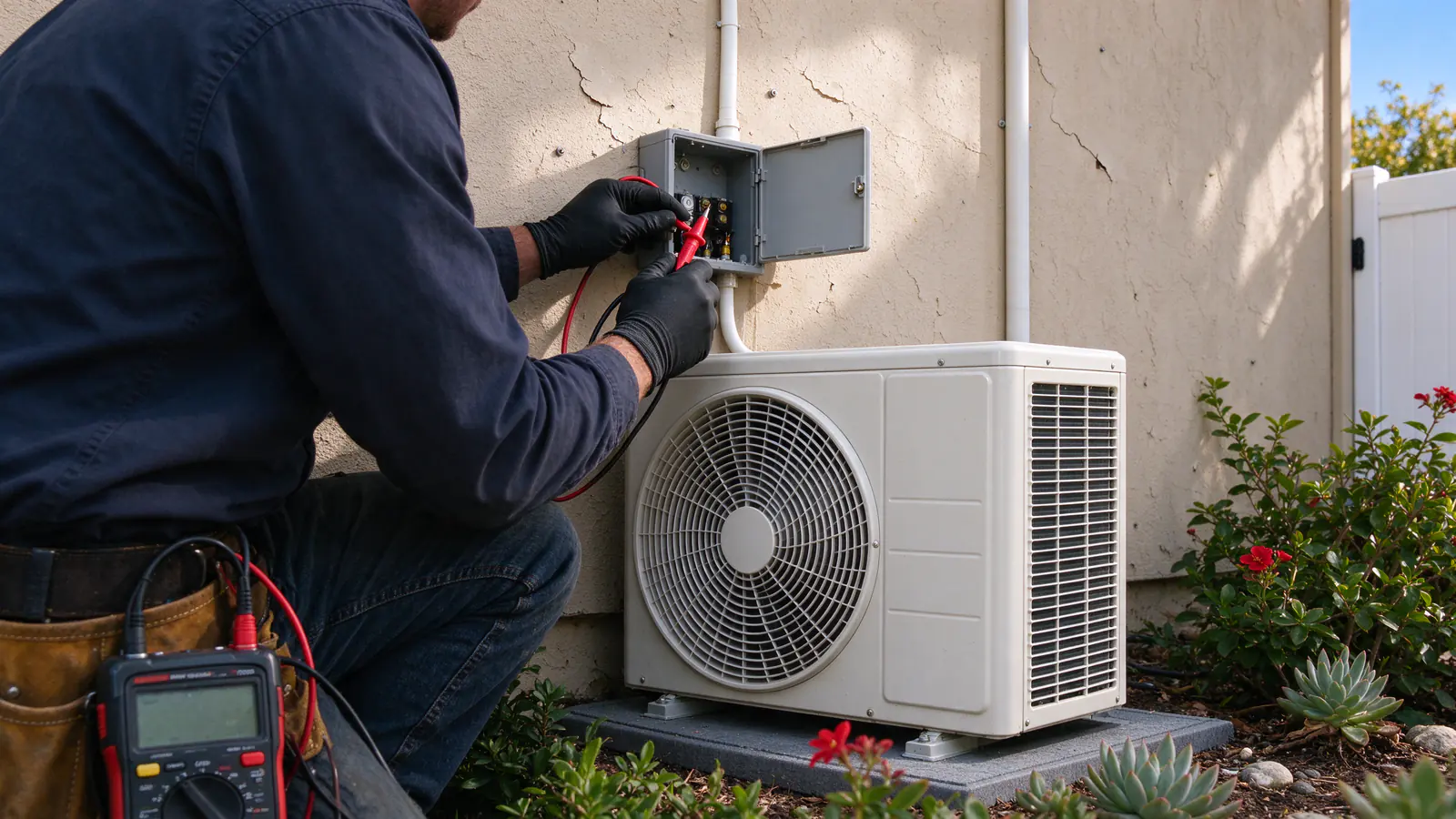
A burning or hot-plastic smell from the indoor head, smoke, sparking at the outdoor unit, or a breaker that trips again after one reset all point to an electrical fault. Switch the system off at its breaker in the panel, not just at the remote, which leaves the unit powered. If there is smoke or flame, leave the area and call 911. Do not open the head or the outdoor unit’s service panel: inverter boards hold a charge after power is removed. The electrical requirements guide explains how mini split circuits and disconnects are laid out.
Water reaching ceilings and walls
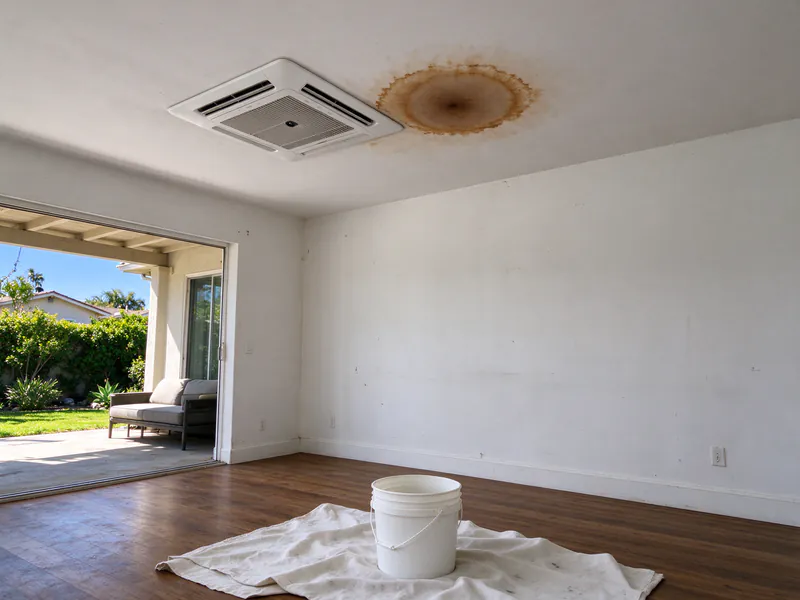
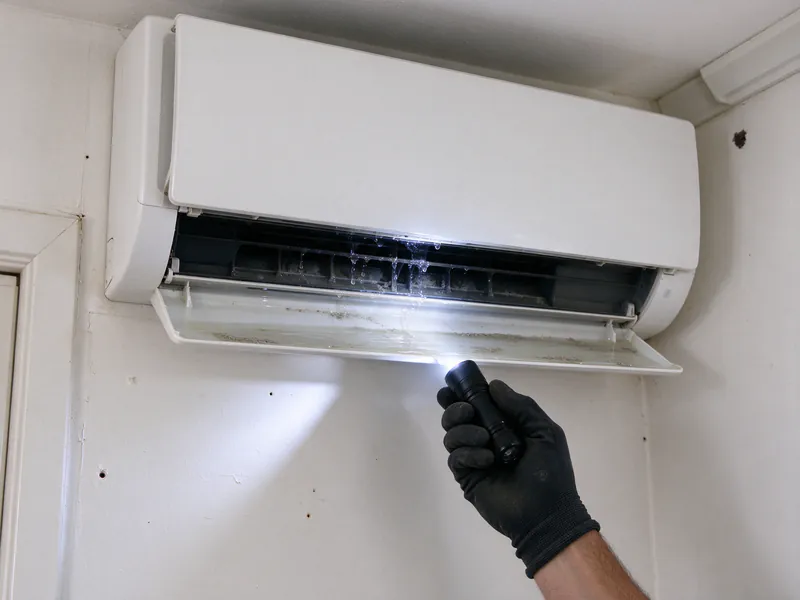
A head that drips onto the floor is a repair. Water soaking into drywall, running inside a wall or coming through a ceiling below a concealed duct unit or cassette is an emergency, because damage grows with every hour of cooling. Switch the system off to stop condensate production, move belongings, and keep people out from under a ceiling that is sagging or bulging. The condensate drainage guide explains how drains and pumps fail.
Heat waves and vulnerable occupants
Inland San Diego gets real heat. NOAA’s climate normals count about 56.8 days a year at 90°F or above in El Cajon and 53.9 in Escondido, against about 3 at Lindbergh Field on the coast. When a mini split fails during that heat in a home with an infant, an elderly person or someone whose health depends on cooling, it is an emergency. While waiting, move them to the coolest room, a lower floor or an air-conditioned public place, and keep them drinking water. The coastal versus inland guide shows how much the climate shifts across the county, and the El Cajon and Escondido area pages cover those inland markets.
Server and IT rooms
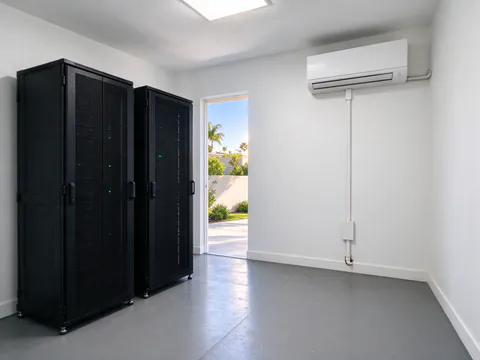
Network closets and small server rooms often rely on one mini split running around the clock. When it stops, a closed room with running equipment heats up quickly, and thermal shutdowns or hardware damage can follow. That makes any loss of cooling an emergency regardless of the weather outside. Rooms that depend on cooling are often better served by a second unit, and server room mini split design covers redundancy, low-ambient operation and alarms. Commercial mini split installation covers offices, retail and restaurants.
When one failure takes out every room
On a multi-zone system, an indoor head that fails usually affects only its own room, but a failed outdoor unit stops every head at once. That turns an inconvenience into a whole-house outage, and in a heat wave it is more likely to be urgent. Note which heads still respond to their remotes and whether the outdoor unit’s fan is turning: that tells the technician whether to start indoors or outdoors. The multi-zone installation page explains how those systems share one compressor, and why households that cannot tolerate a full outage sometimes split rooms across two outdoor units.
What you can safely check yourself
A few checks take minutes and sometimes solve the problem outright:
- The remote. Fresh batteries, the mode set to Cool or Heat rather than Dry, Fan or Auto, and a setpoint below or above room temperature as needed.
- The filter. Lift the front panel and slide out the mesh filters. A filter matted with dust can cut airflow enough to freeze the coil or stop the head cooling.
- The breaker. If it has tripped and there is no smell or damage, reset it once.
- The outdoor unit. From a step back, look for leaves, a cover left on, or a blocked fan. Clear loose debris by hand with the power off.
Then stop. Leave the panels closed, the refrigerant lines and flare nuts alone, and the condensate pump and its safety switch as they are. Do not add refrigerant from a retail kit, pressure-wash the coils or reset a breaker more than once.
What to include in an emergency request
A clear description saves time on site. Include:
- What the system is doing: not cooling, leaking, smelling, tripping a breaker, or showing a code.
- Whether water, smoke or a burning smell is involved, and whether the breaker is now off.
- Who is at home, and whether anyone is especially vulnerable to heat or cold.
- The type of system: a single wall head, a multi-zone system, a cassette or a concealed unit, and for a business, whether it cools a server room.
- Any error code or blink pattern, and the model number from the label on the indoor unit’s side, if you can reach it safely.
- Access details: a side-yard gate, a dog, a roof-mounted outdoor unit or a building with restricted after-hours access.
What an emergency visit costs
A diagnostic or service-call fee for San Diego-area HVAC repairs, mini splits included, typically runs about $75 to $150 for a standard daytime visit and up to about $250 for after-hours calls. Many companies credit it toward the repair if you go ahead. The repair is priced separately once the fault is confirmed; common repairs, from capacitors to refrigerant leaks, are covered with their typical ranges on the mini split repair page. All figures are budgeting ranges, not quotes.
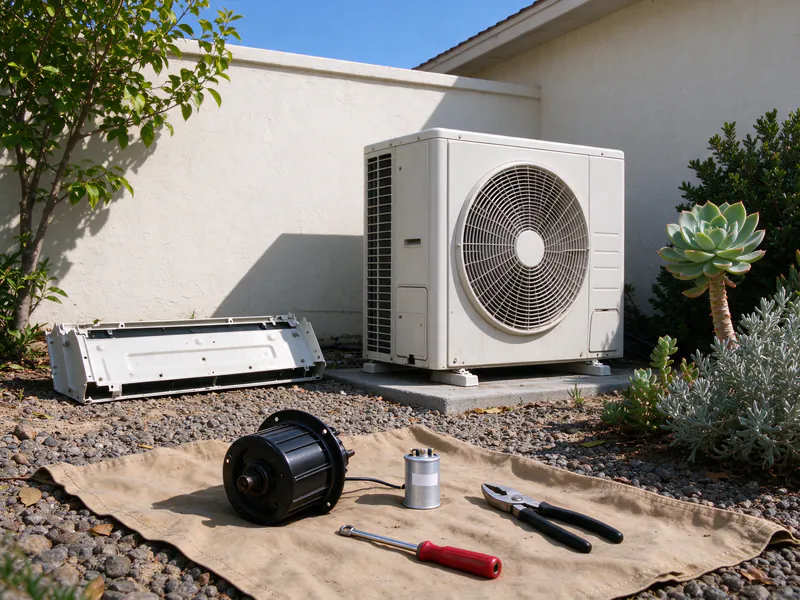
Some emergency calls end with the system made safe rather than fixed, because a board, motor or compressor has to be ordered. When the failure is a compressor on an older system, mini split replacement may be the better spend, and the installation cost guide shows what a new system typically costs. Regular mini split maintenance before the hot months catches clogged drains and failing capacitors before they turn into a late-night call.