
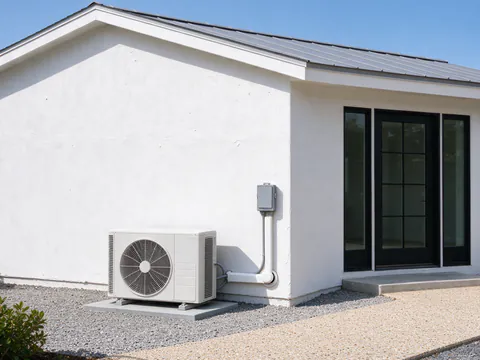
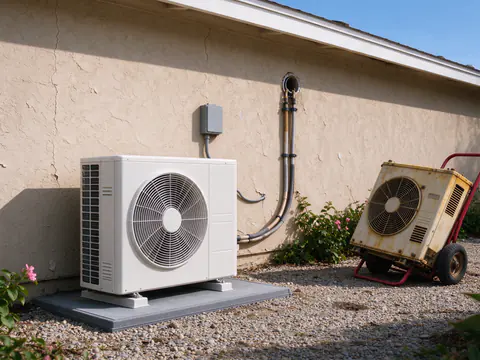
A mini split installation planned in Escondido during a September heat spell gets its harder test on a January morning. The California Energy Commission’s design tables put Escondido’s heating design at 31 to 34°F and list 2,005 heating degree days a year, against 1,507 at San Diego’s airport, so a system picked only on cooling capacity can come up short when it is asked for heat.
Escondido and San Marcos are separate cities, each with its own building division and permit rules. For homes in either, Mesa Mini Split San Diego weights heating as heavily as cooling, and the licensed and insured contractors who install the systems hold the California C-20 (HVAC) license.
Reading the heating numbers, not just the cooling ones
Heating capacity on a mini split spec sheet is normally a rating at 47°F outdoors, and output falls as the air gets colder. For an Escondido room the useful figure is the capacity the manufacturer publishes at or near the 31 to 34°F design temperature, set against the room’s heating load from a Manual J calculation. Low-temperature performance is model specific, so it is read from the equipment data, not assumed.
The CEC’s tables also list a median extreme low of 26°F at Escondido’s station, which means some winters dip below the design figure. Where a house has an existing furnace or wall heater, keeping it for those mornings is a reasonable choice; where the mini split is the only heat, its low-temperature capacity carries more weight. San Marcos shares the same 31 to 34°F heating design in the CEC’s tables.
Summer still sets a large load. Escondido’s 1% cooling design is 88°F, NOAA’s normals count 53.9 days a year at 90°F or hotter and 1,517 cooling degree days, and during the September 2024 heat event the station reached 112°F on September 6, with a 79°F low two days later. An inverter mini split covers both ends when it is sized to the larger load and can still throttle down for mild weather. Square footage alone gets that balance wrong; the sizing guide shows what goes into the calculation, and the coastal vs inland guide explains how the coast differs.
Frost, defrost and where the water goes
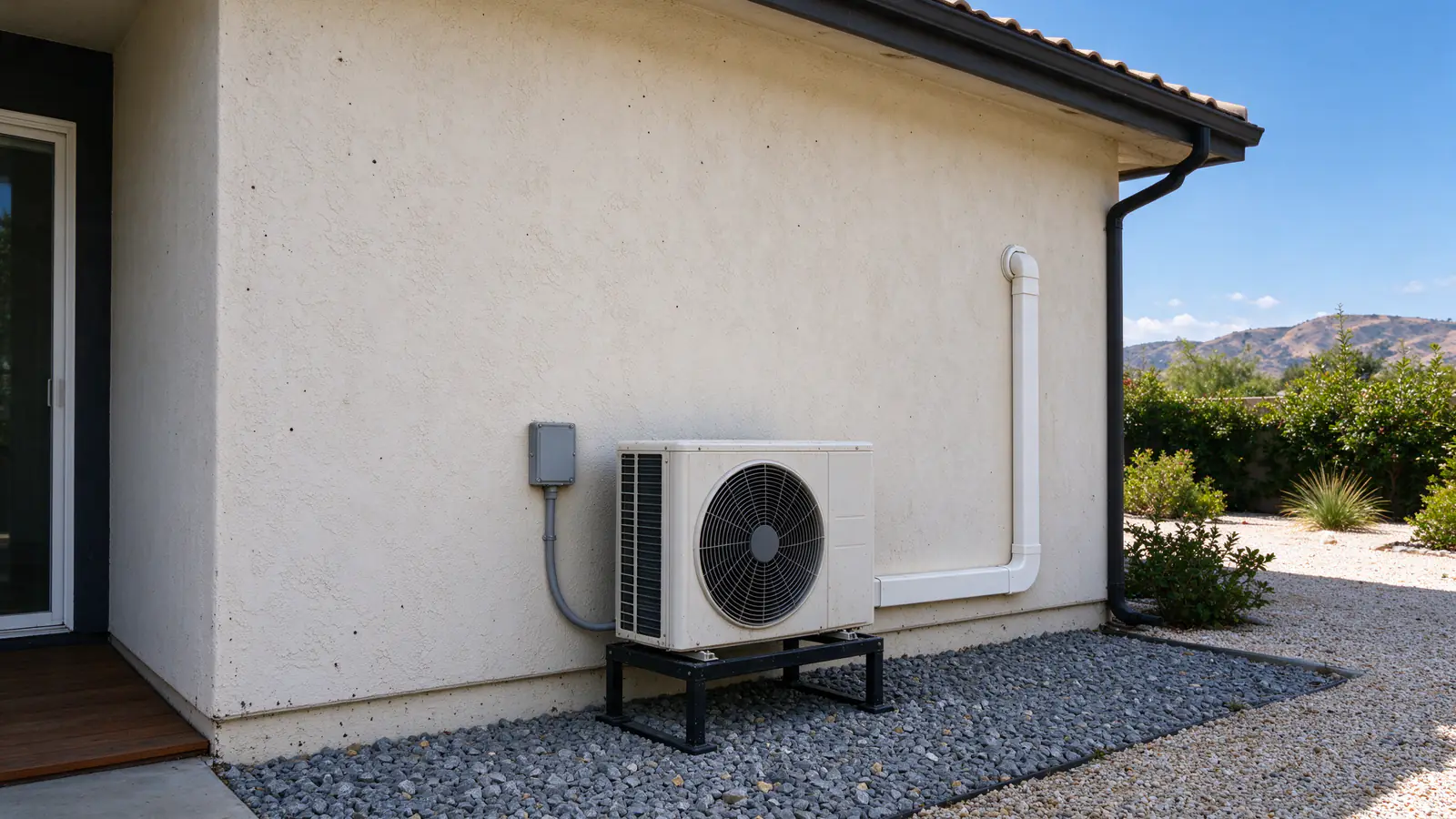
In heating mode the outdoor coil runs colder than the air around it. On a damp morning near freezing it collects frost, and the unit clears it with defrost cycles that release meltwater from the base of the outdoor unit. In Escondido, drainage outside matters as much as the condensate line inside.
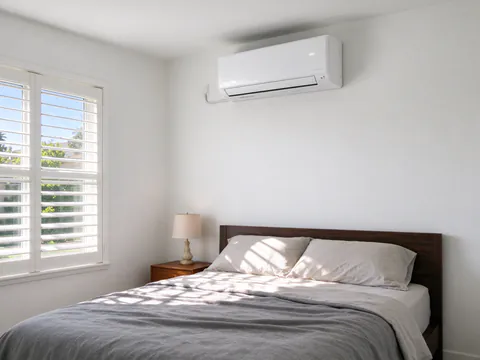
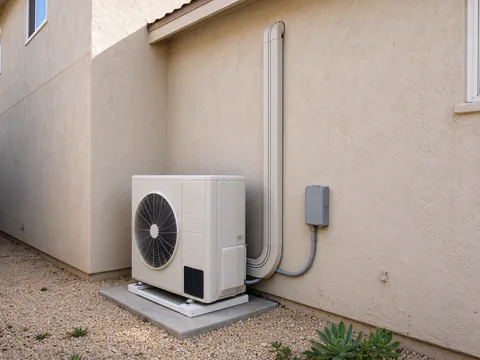
That shapes the outdoor setup. A raised stand or pad lets meltwater fall clear of the coil instead of building up underneath, and the spot should drain away from the foundation and off any path where water could freeze on the coldest mornings. Indoors, each head still makes condensate in cooling season, removed by gravity through the wall where the fall allows or by a small pump where it does not; the condensate guide compares the options. The placement guide covers clearances, airflow and service access.
Clean Energy Alliance, TOU-ELEC and gas furnaces
Escondido and San Marcos households take generation from Clean Energy Alliance unless they opt out, and SDG&E delivers it. In the joint rate comparison the two publish, CEA’s base product averaged slightly less per kWh than SDG&E’s own generation and its premium products averaged more, so the provider shifts operating costs by a little, not a lot.
The larger decision is the rate plan and what the heat pump replaces. A home with an electric heat pump qualifies for SDG&E’s TOU-ELEC plan. Against electric resistance heat, a heat pump uses far less electricity for the same warmth. Against gas, it is close: on SDG&E’s published rates, a heat pump needs a coefficient of performance of about 3.3 to match an 80% furnace at TOU-ELEC winter off-peak prices, about 3.0 at super off-peak and about 4.7 on TOU-DR1 off-peak. Those are estimates from published rates, which change, and they mean savings against gas cannot be promised; cooling and comfort carry the case. The operating cost guide works through both plans, and the rebates guide tracks which incentives are still open.
Permits through Escondido’s Building Division
The City of Escondido’s Building Division issues mini split permits inside city limits, and plan requirements and fees are confirmed per address before the scope is final. The permit and inspection are part of the work. The division also publishes weekly reports of permits issued, which show how rare ductless work is there next to other heat pump jobs.
Across 15 weekly reports from late June to early October 2026, 3 of 922 permits mentioned a mini split or ductless system, among them a two-zone, 1.5-ton system with its outdoor unit in a back yard and a ductless replacement, while 47 entries mentioned heat pumps. Hidden Meadows and other unincorporated pockets near the city permit through the County of San Diego instead, at $392 for a mechanical-only permit or $498 with electrical work. From January 1, 2027, SB 222 also limits the setback any California city can require for a residential heat pump system to 3 ft in side and back yards.
San Marcos
San Marcos is a separate city with its own building division, so its permit path is confirmed per address. It sits in climate zone 10 on the CEC’s climate zone map and shares Escondido’s heating design. The housing is newer: 27.3% of homes were built before 1980, against 46.9% in Escondido, and 10.1% are mobile homes. Where a newer house already has central air, the usual case for a mini split is a space the ducts serve badly, such as a bonus room, a converted garage or an addition. Neighborhoods along Twin Oaks Valley and near Palomar College follow the same CEA generation and inland sizing.
Older Escondido houses, ADUs and add-on rooms
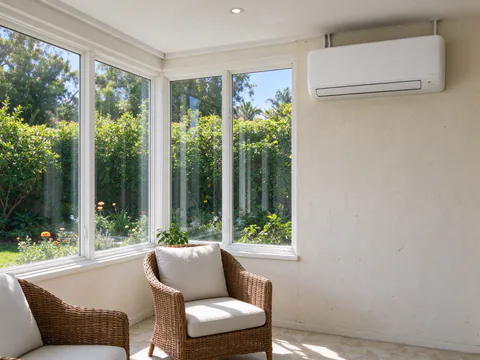
In Escondido’s older housing around Grand Avenue and Old Escondido, a house without ducts may suit a multi-zone system for several rooms or a single head for the one that matters most. Where a lot adds a backyard unit, the ADU page covers its own Title 24 path. And where an older mini split is failing, replacement is scoped separately from a new install, starting with what can be reused.