Mesa Mini Split San Diego maintains and cleans mini splits across San Diego and San Diego County, including systems installed by other companies. The work is done by licensed and insured contractors holding the California C-20 (HVAC) license, and it covers both halves of the system: the indoor heads that pull room air through a filter and coil, and the outdoor unit that sits in the weather all year.
A mini split asks for little, but what it asks for matters. Its filters are the only thing between room air and a cold, wet coil. Its drain has to carry away the water that coil makes every hour it cools. And on much of the coast, its outdoor coil sits in salt-laden wind. Maintenance is the visit that keeps those three things from turning into a mini split repair.
What a routine maintenance visit covers
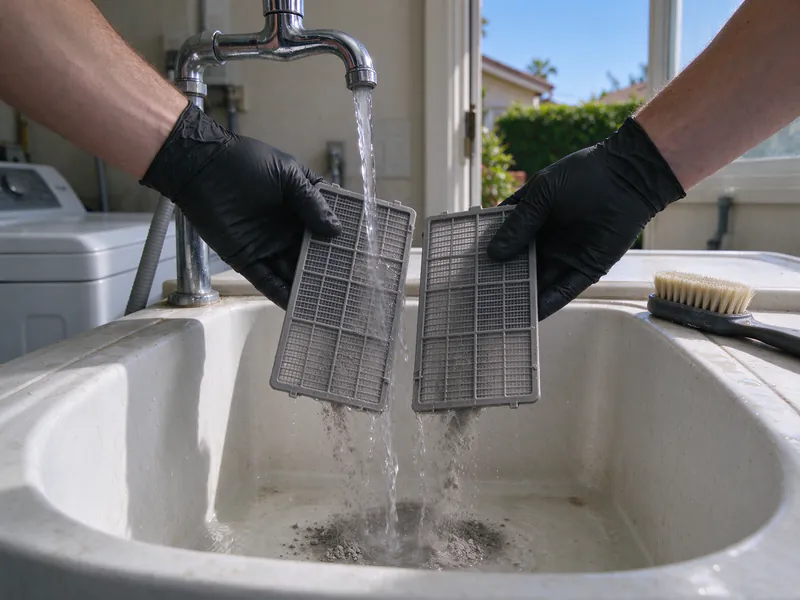
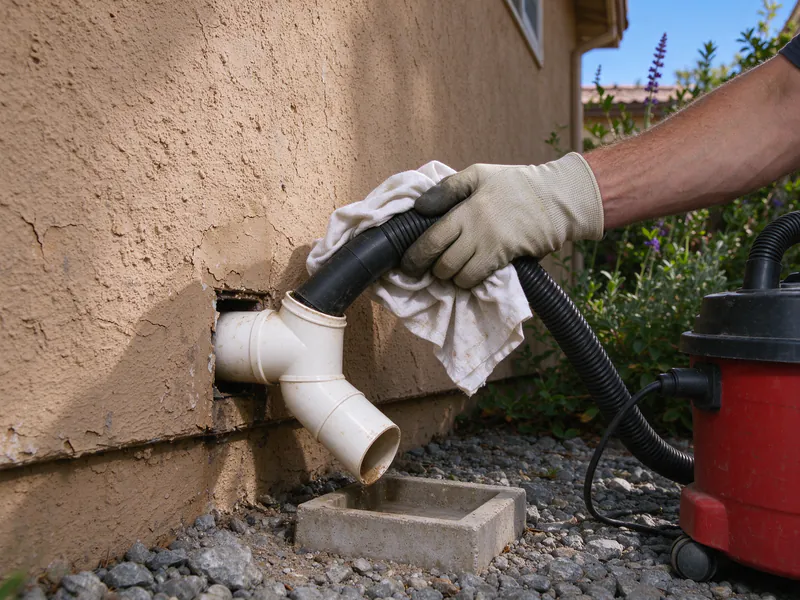
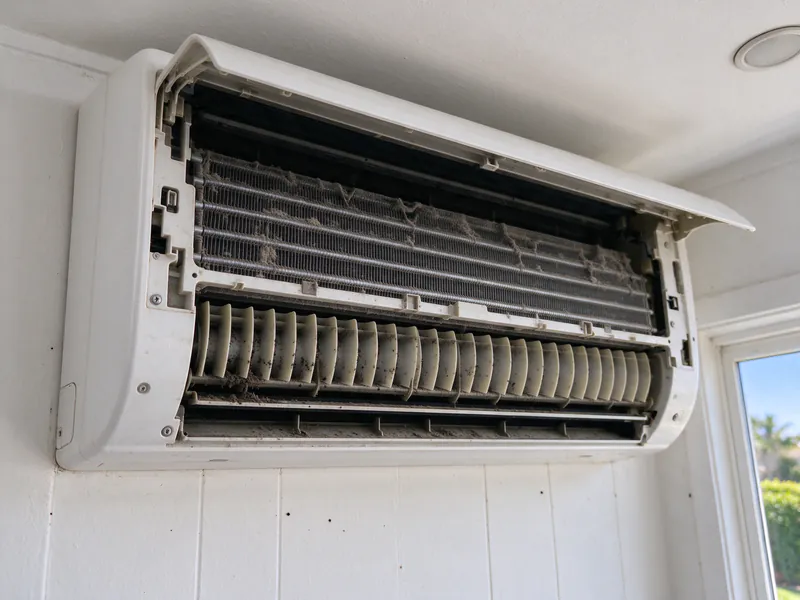
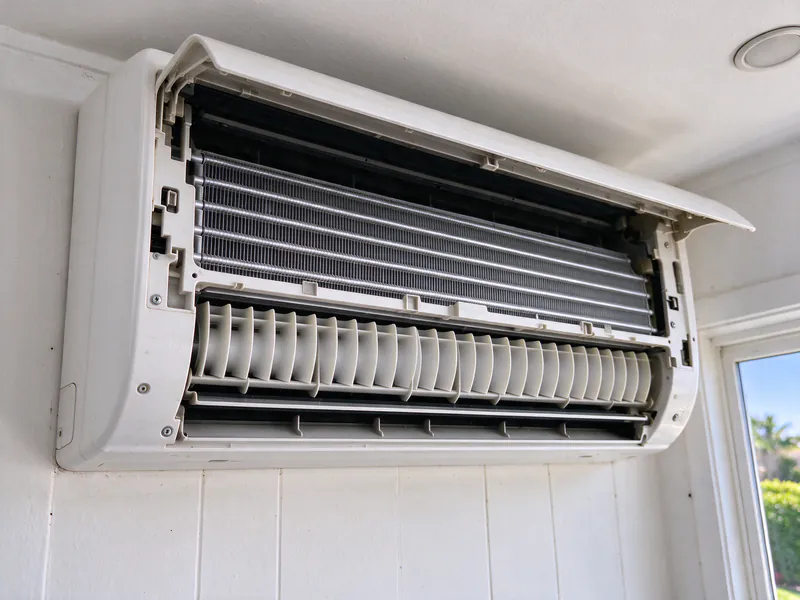
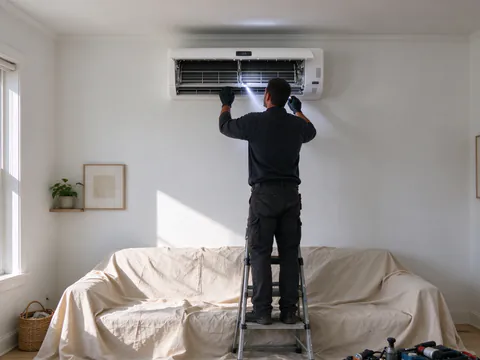
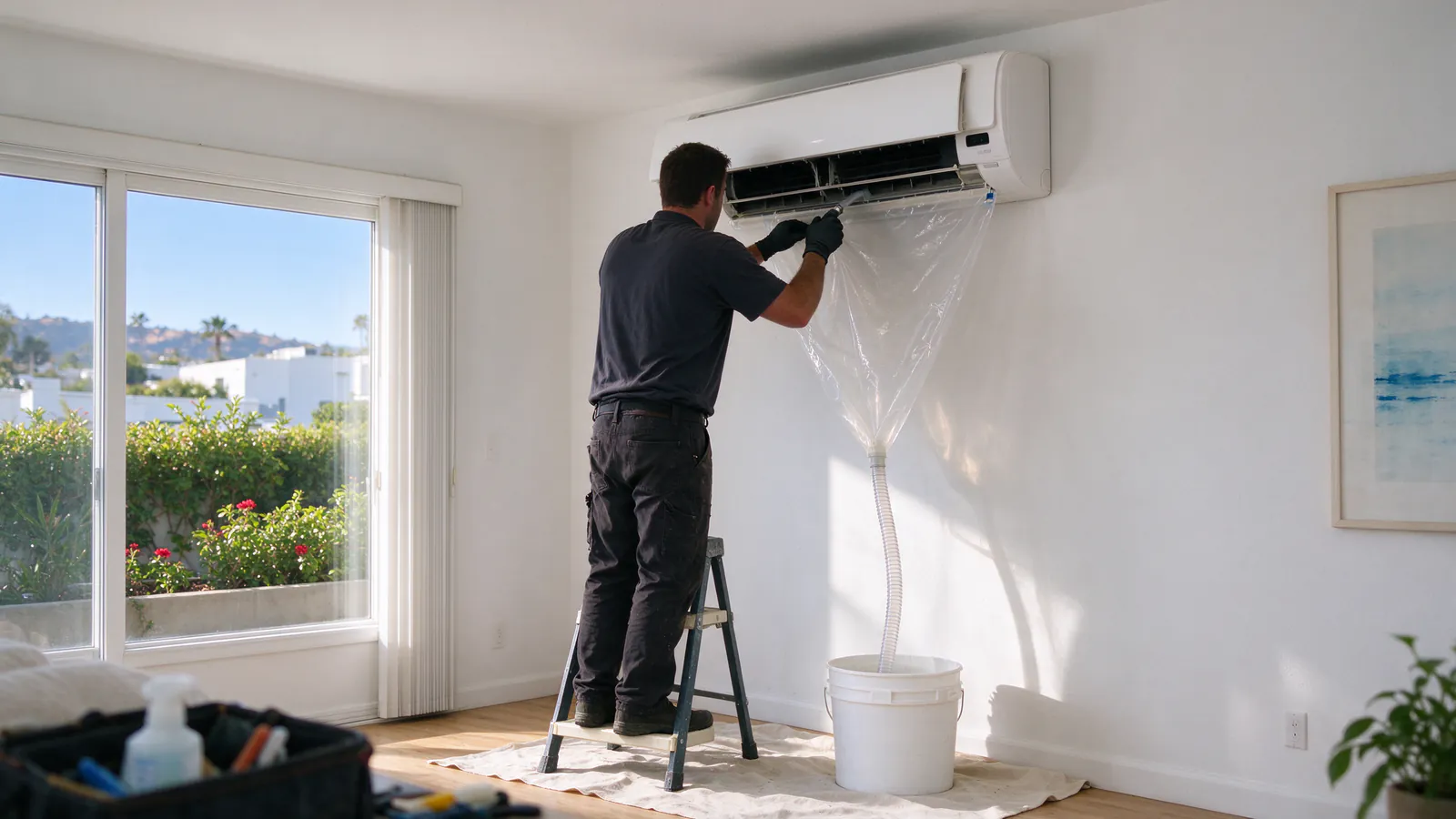
A routine visit is an inspection and cleaning of a system that is working, done so it keeps working well. On the indoor side, the technician removes and washes the filters, then shines a light past them at the coil, blower wheel and drain pan, because a head can look clean from the front while the wheel behind it is coated. The condensate line is flushed and its slope, or its pump, checked. Operating temperatures are read with the system running, and any stored error history is noted.
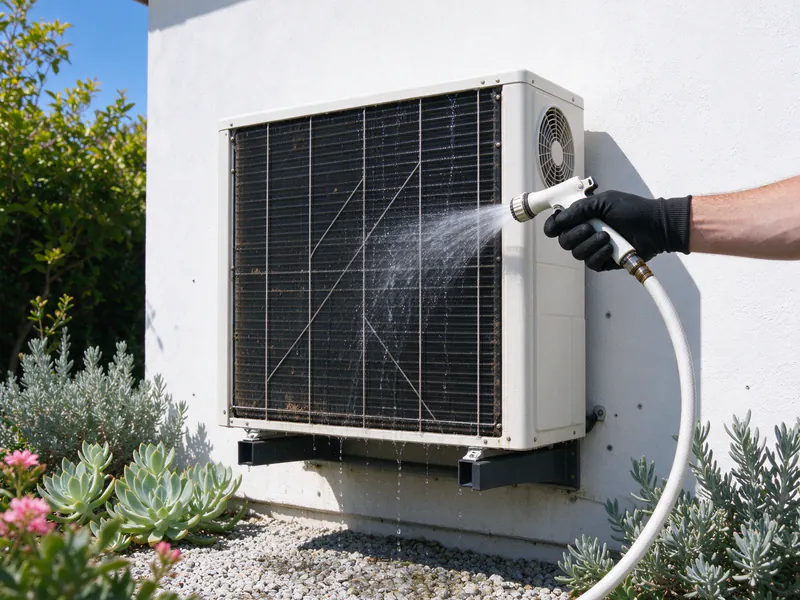
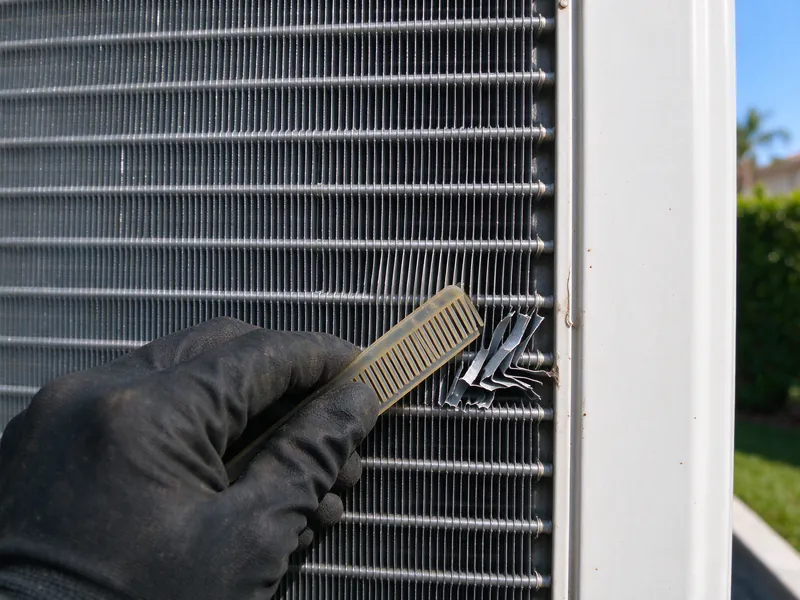
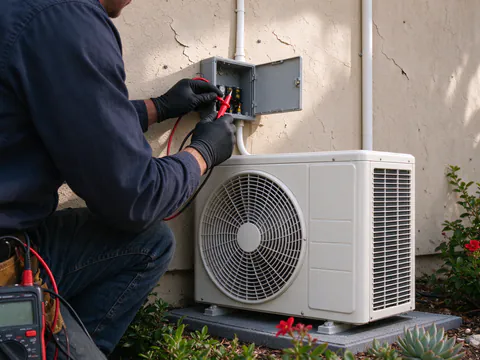
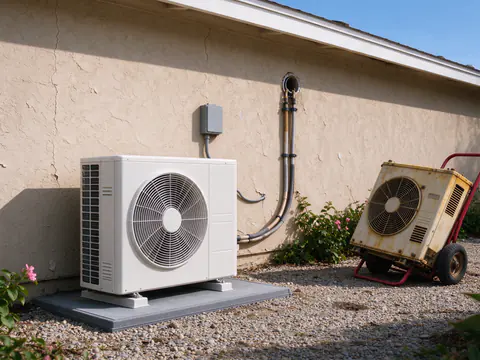
Outside, the coil is inspected for corrosion, debris and bent fins and cleaned with a method suited to its coating. Electrical connections at the outdoor unit and the disconnect get a check with the power isolated, and the line-hide is checked for cracks that let sun reach the line-set insulation. Anything that needs a part, a refrigerant repair or more time goes onto a written note rather than into the maintenance visit.
Maintenance does not need a permit. The City of San Diego’s permit guidance says repair-only work does not require one; replacing equipment does, which is why mini split replacement is a separate service.
Routine service or a deep cleaning
A deep cleaning is the step past routine service, aimed at buildup inside the indoor head that filters do not stop and a light surface clean does not remove. It is usually done per head, and it is the answer to a smell or to growth you can see on the louvers.
The blower wheel
The blower wheel is the long, finned cylinder that pushes air out of the head. Its blades sit in damp air, and dust that slips past a filter sticks to them. Over time the blades collect a layer that reduces airflow, throws the wheel off balance and gives growth somewhere to live. On a deep cleaning, the wheel is cleaned either in place with the head bagged so rinse water drains into a bucket, or removed from the head entirely, which reaches more but takes longer.
The coil and the drain pan
The indoor coil gets washed through with a cleaner and a rinse, not only sprayed on the face. The drain pan beneath it collects water and whatever that water carries, so a slimy pan is common in heads that run long cooling seasons. Cleaning the pan and flushing the line together matters: a clean coil over a pan that still holds standing water brings the smell straight back.
Signs a head is due
A musty smell at start-up, black specks on the louvers or the vanes, airflow that has dropped compared with the other heads in the house, and water spitting from the outlet all point toward a deep cleaning. Homeowners report that the smell is often the first sign they noticed. None of these signs proves the cause alone, so the head is opened and looked at before the work is chosen.
Filters: the part owners look after
Mini split filters are washable mesh screens behind the front panel of each head. Between visits, cleaning them is the owner’s job, and the owner’s manual sets the interval. Clogged filters reduce airflow across the coil, which lowers capacity, can let the coil run cold enough to freeze in cooling, and pushes more dust into the blower wheel. Rinse them, let them dry fully and refit them; running a head without its filters while they dry pulls dust straight into the coil.
Some heads also carry a secondary filter or a deodorizing element that is replaced rather than washed. The model’s manual says which. A head that serves a kitchen, a room with pets or a dusty garage gym needs filter checks more often than a guest bedroom used a few weeks a year.
Drain lines and condensate pumps
Every head makes water in cooling and in dry mode, and late-summer coastal air carries plenty: NOAA’s climate normals put the August mean dew point at San Diego’s Lindbergh Field at 62.5°F. That water drains by gravity or through a pump. A gravity line clogs when slime from the pan builds inside it or when the line sags and holds water. A pump adds moving parts, a small float and often a safety switch meant to stop the head before the pan overflows. Maintenance checks each in turn: flush the line, confirm the outlet outside is clear, lift the pump’s float to test it and confirm the safety switch works. Water dripping from the front of a head is the classic result of a missed check; the condensate drainage guide covers both drain types.
Coastal coil care
Salt carried on onshore wind corrodes the thin aluminum fins of an outdoor coil, and corroded fins pass less heat. No manufacturer publishes a distance-from-the-ocean rule for San Diego, so care is planned by exposure rather than mileage: a unit that faces the water, takes spray or sits on a bayfront lot needs more attention than one tucked on the lee side of the house a few blocks inland. The coastal San Diego service area page covers how those exposures differ from Point Loma to La Jolla.
Coastal coil care has three parts. Rinsing removes salt before it does damage, with low-pressure water so the fins are not bent; a coated coil is rinsed rather than scrubbed with a harsh cleaner that can attack its coating. Inspection catches fins that have started to powder or flake. And frequency is matched to exposure: once a year for a sheltered unit, more often for one in the direct wind off the water. Where an older bare-fin coil is already corroding, a field-applied coating is sometimes discussed; its value depends on the coil’s condition and the coating grade, so it is quoted on inspection. The coastal vs inland guide explains why the two halves of the county wear equipment differently.
Outdoor clearance
An outdoor unit draws air through its coil and blows it out the front or the top. Plants that grow into it, a trash bin parked against it or a fence board leaning on it starve the coil of air, so it runs hotter in cooling and works harder for the same output. The unit’s installation manual gives the minimum clear space on each side, and maintenance checks the site against it. Leaves and debris inside the cabinet, a pad that has settled and tilted, or a wall bracket that has loosened are noted at the same time. If the unit was placed too tight to begin with, moving it is an installation question; the placement guide covers where an outdoor unit can sit.
What mini split maintenance costs
A routine mini split maintenance visit typically runs about $90 to $250 for the first indoor head. Each additional indoor head usually adds about $40 to $120 to a maintenance visit, so a multi-zone system with four heads costs more to service than a single-zone system, though less than four separate visits. A national budgeting range for a deep cleaning of one indoor head, with the blower wheel and coil washed, is about $150 to $450; heavy mold growth costs more. These are budgeting ranges, not quotes.
Annual maintenance plans from San Diego-area HVAC companies typically cost about $100 to $300 a year for one system, usually with one or two visits; extra indoor heads are often added for a per-head fee. Plans differ in what they cover, so compare the visit count and per-head terms. When maintenance turns up a clogged drain, clearing a clogged condensate drain line typically runs about $100 to $375 for San Diego-area service calls. Replacing a condensate pump typically runs about $220 to $500 installed; the pump itself is a small part of that.
Coastal coil cleaning and coil coating have no reliable public range, so they are priced from what moves them: how exposed the unit is, whether its coil is coated or bare, how high or hard to reach it sits and how often it is done. Heads mounted high over stairwells, recessed ceiling cassettes with built-in pumps, or outdoor units on roofs and tall brackets take longer at every visit. The cost estimator covers installation budgets if a replacement is on the table.
When maintenance turns into repair
A maintenance visit is the right time to find a problem early, but it is not a repair. A weak capacitor, a failing fan motor, oil at a flare joint or a coil that will not hold temperature each becomes its own written repair item, with the choice left to the owner. If a system is old, needs repeated repairs or uses a refrigerant whose parts are getting harder to source, the note says so, and mini split replacement becomes a fair comparison. When a head stops cooling during a heat wave or water is running down a wall, that is not a maintenance booking: emergency mini split repair is available 24/7. Clean filters and a clear coil also keep running costs down, which the operating cost guide explains in terms of SDG&E’s published rates, and a rattle or new hum after cleaning is worth checking against the mini split noise guide.